Tees Neuro Physiotherapy incorporate the TYROSTATION by Tyromotion
Lucille Watts • February 3, 2021

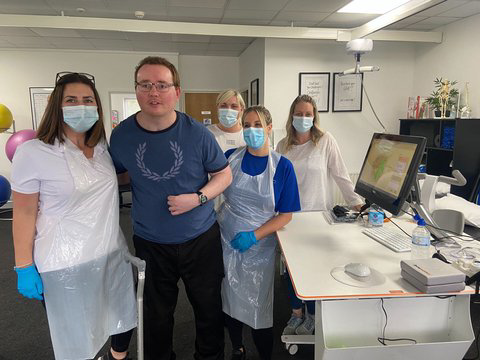
Tees Neuro Physiotherapy recently purchased a new TYROSTATION by Tyromotion for its clinic in Billingham, near Middlesbrough.


Clinical Director, Victoria Fairhall, first became aware of Tyromotion devices through another clinic in the region who was using the devices at its clinics. Victoria was keen to offer her clients a more intensive, fun and motivating therapy and was keen on incorporating more neurological rehabilitation technology to achieve this. 


Victoria said “Increasingly there is more and more literature pointing towards increasing dosage and intensity in rehabilitation to help patients to recovery quicker and achieve better outcomes.  In addition to this, there is further evidence demonstrating that robotics in rehabilitation can help us to achieve this.”


Physiotherapists at Tees Neuro Physiotherapy tried a range of different upper limb technology but felt the devices were not quite ready for market and required some development to be ready for clinical settings to benefit patients and therapists. Consequently, they turned their attention to what Tyromotion could offer.


Having looked at all the Tyromotion devices they ultimately decided the Tyrostation (incorporating PABLO and TYMO) would be an ideal starter device. Its versatility, offering both upper and lower limb assessment, reporting and therapy and its ability to be used by a wide range of clients appealed to Victoria and the team. The Tyrostation also offers games as part of the therapy which are fun and motivating for patients. Victoria as part of her research reached out to other clinics with the Tyrostation asking for their honest feedback on the device all of which was positive. Victoria along with Amanda Jackson from OT Rehab North East invited Ectron to come to Tees Neuro Physiotherapy to give the team a demonstration on the Tyrstation.


Victoria says:


 “It was the demonstration that really convinced Amanda and I.  We were converted. The Tyrostation is just so versatile. We can use the Tyrostation with all of our clients in so many different ways. It is very easy to use and navigate your way around”


Ectron introduced Tees Neuro Physiotherapy to Jack at Absolute Finance who was able to support with the finance process


Victoria says:


 “Working with Jack at Absolute Finance made the whole process of purchasing the device so much easier. It saved me the time having to research bank loans and different financing options. Jack made the process much smoother and helped to take the worry out of things”


Once the Tyrsostation was installed Tees Neuro Physiotherapy’s younger clients were instantly drawn to the Tyrostation and wanted to use it. Some of the older clients were a little sceptical at first but have quickly taken to the Tyrostation and once they had a go, they too were converted!


Victoria says:


“The biggest thing we have seen so far is the Tyrostation is really useful for patients who are generally quite inattentive. Those patients automatically and instinctively begin to initiate movement”


Tees Neuro Physiotherapy have reported that they have been able to use the Tyrostation with both low level and high-level patients.  One client with a spinal injury who had very little hand and arm function was able to benefit and progress from using the Tyrostation’s Pablo motion-sensors.  Whereas another patient who was more able was able to use the Pablo to practice more fine motor skills and has now managed to return to her administration job”


The special design of the PABLO hand sensor makes it possible to measure the exerted force for pinch, lateral, three pint and interdigital grips as well as the arms movements. Additionally, Pablo can measure every kind of body movement including the head, arm, trunk and leg.


When asked whether Victoria would recommend the Tyrostation to other clinics who were looking to invest in technology, Victoria said


“Yes, I would definitely recommend the Tyrostation. If you are a small clinic the Tyrostation is a great device due to its versatility.  The other thing we have found is that patients rather than book for just one-hour hands-on physiotherapy they want to add on an extra hour and spend that time with the Tyrostation” 


About Tees Neuro Physiotherapy

Tees Neuro Physiotherapy is a team of specialist neurological physiotherapists based in Billingham, near Middlesbrough. The team are highly trained in the management of all neurological conditions and has a special interest in spasticity management, functional motor disorders and Advanced Bobath trained. If you would like to book an appointment at Tees Neuro Physiotherapy, please call 01642 563 222 or 07792 120 454. Alternatively, please email: victoria@teesneurophysiotherapy.com


About TYROSTATION

The Tyrostation is a space-saving system solution for Pablo and Tymo. Thanks to the integrated storage space, all devices plus accessories are within reach and immediately ready for use. The therapy surface is height-adjustable and can optimally accommodate all patients. The Tyrostation is a popular choice for clinics and hospitals throughout the UK. 


The All-In-One PC is equipped with the TyroS software. All devices can be easily and effortlessly used with the Tyrostation. This enables seamless assessment and recording of the rehabilitation process possible.


About PABLO

The PABLO system is a modern assessment and therapy device for the rehabilitation of patients with impaired motor functions. It supports upper and lower limbs, as well as body and head applications. PABLO can be used on neurological, orthopaedic, paediatric and geriatric patients with deficits in movement and force control, accuracy, aiming, coordination, trunk control and balance.


About TYMO

The TYMO is a sensor-based rehabilitation device for static and dynamic assessment- and therapy applications. The slim, wireless design offers a plethora of therapy options be it the improvement of balance and postural control, or active use of force and support activities of the upper extremities, with TYMO the therapist’s creativity knows no limits. Even the pre-set starting positions (support, sitting, standing) can be freely expanded.

Both devices allow therapists to offer accurate patient assessments and fun, motivational therapy.


For more information about the Tyrostation or to book a virtual or face-to-face demonstration for your hospital or clinic, please call 0117 941 3979 or email: enquries@ectron.co.uk

Share this post

More Recent News
By Giuliana Kinnerly March 11, 2026
Robotic rehabilitation is transforming the way neurological recovery is supported, but for many people, it can still feel a little unclear. What does it actually do, and how does it help patients recover after stroke, spinal injury or neurological conditions? In simple terms, robotic rehabilitation technology is designed to support movement, repetition and progress. It works alongside therapists to help patients rebuild strength, coordination and independence at every stage of recovery. Supporting Recovery After Stroke and Neurological Injury After a stroke, spinal cord injury or neurological condition, the brain and body often need to relearn how to move. This can be a long and challenging process that requires consistent, repetitive and targeted therapy. Robotic rehabilitation devices help by guiding and supporting movement in a controlled, safe way. Whether it’s helping a patient take steps, move their arms or improve hand function, the technology enables high levels of repetition that are essential for retraining the brain and muscles. This repetitive, task-specific training supports neuroplasticity, the brain’s ability to form new connections and relearn skills after injury. Encouraging Early and Safe Movement One of the biggest benefits of robotic rehabilitation is that it allows patients to begin movement earlier in their recovery, often sooner than with traditional therapy alone. The technology can support body weight, guide limbs and adjust to each patient’s ability, meaning therapy can start gently and build over time. This early movement can help prevent muscle loss, improve circulation and support overall recovery. It also creates a safe environment where patients can practise movement with reduced risk of strain or injury. Building Confidence and Motivation Recovery can be physically and emotionally demanding. Robotic rehabilitation often includes interactive feedback and measurable progress, helping patients see how they are improving over time. Being able to track progress, whether it’s increased strength, range of motion or endurance, can be hugely motivating. Patients often feel more engaged in their therapy when they can clearly see their development and achievements. This boost in confidence can play an important role in maintaining motivation throughout rehabilitation. Supporting Therapists, Not Replacing Them Robotic rehabilitation doesn’t replace therapists, it enhances the work they do. The technology supports therapists by reducing the physical strain of repetitive movement assistance and enabling longer, more consistent therapy sessions. This allows clinicians to focus on tailoring treatment, analysing progress and supporting each patient’s individual goals. It’s a collaborative approach, combining clinical expertise with innovative tools to achieve the best possible outcomes. Personalised to Every Patient No two recovery journeys are the same. Robotic rehabilitation systems can be adjusted to suit each patient’s needs, whether they require full support with movement or are ready for more active, resistive training. As strength and ability improve, the technology adapts, providing the right level of challenge and support at every stage. A Modern Approach to Rehabilitation Robotic rehabilitation is helping clinics and therapy centres provide high-quality, consistent and measurable therapy for patients recovering from neurological injury. By supporting early movement, increasing repetition and tracking progress, it plays a valuable role in helping patients regain independence and confidence. Most importantly, it offers something every patient needs during recovery: the opportunity to keep moving forward. Here are some of the robotic devices we can provide: LEXO – A state-of-the-art robotic gait trainer offering highly adaptive, safe, and intensive walking rehabilitation. Amadeo – A globally recognised robotic hand therapy system, enabling early, highly repetitive fine-motor rehabilitation. Omego Plus – A lower-limb robotic trainer ideal for early mobilisation and targeted strength and coordination work. Diego – A sophisticated upper-limb robotic exoskeleton supporting arm movement for patients with severe weakness. Ekso NR – A robotic exoskeleton that helps to practise standing and walking during rehabilitation. Each device is among the best in its class, offering unparalleled scope for personalised rehabilitation, spanning early acute recovery through to high-level performance retraining. Take a look below...
By Giuliana Kinnerly November 26, 2025
Ectron’s Role in Transforming Rehabilitation at the National Rehabilitation Centre The launch of the National Rehabilitation Centre (NRC) marks a defining moment for the future of rehabilitation in the UK - and Ectron is incredibly proud to play a integral role in bringing world-leading robotic technology into the heart of the NHS. As pioneers in advanced rehabilitation solutions, we’ve partnered with the NRC to deliver a comprehensive suite of cutting-edge systems designed to support patients with life-changing injuries on their journey back to independence. This is one of the most ambitious and forward-thinking robotics installations ever seen in the NHS, and a milestone not just for Ectron, but for rehabilitation nationwide. The brand-new £105 million NHS National Rehabilitation Centre (NRC), run by Nottingham University Hospitals NHS Trust, has unveiled the most comprehensive robotics suite in the NHS. The pioneering robotics suite features cutting-edge technology from across Europe, including robots and devices which can be used when helping patients to walk again, relearn how to use their hands, and build function in specific parts of their body. The NRC is a 70-bed, state-of-the-art specialist rehabilitation centre for NHS patients who have experienced a life-changing illness or injury and is co-located with the Defence Medical Rehabilitation Centre (DMRC) on the Stanford Hall Rehabilitation Estate (SHRE) near Loughborough. A Fully Integrated Robotic Therapy Suite Ectron has supplied an entire ecosystem of leading technologies, each addressing a different aspect of physical recovery. Together, they form a seamless, multidisciplinary toolkit for therapists — enabling personalised, data-driven, intensive therapy that was previously only possible in specialist centres abroad. The NRC now features: LEXO – A state-of-the-art robotic gait trainer offering highly adaptive, safe, and intensive walking rehabilitation. D-Wall – An interactive digital mirror system that blends motion capture, balance training and functional movement work into a single immersive platform. Fesia Grasp & Fesia Walk – Advanced functional electrical stimulation devices that help retrain upper and lower limb muscle activation with remarkable precision. Amadeo – A globally recognised robotic hand therapy system, enabling early, highly repetitive fine-motor rehabilitation. MYRO – A sensor-based interactive therapy surface allowing task-oriented training that bridges physical and cognitive rehabilitation. Omego Plus – A lower-limb robotic trainer ideal for early mobilisation and targeted strength and coordination work. Diego – A sophisticated upper-limb robotic exoskeleton supporting arm movement for patients with severe weakness. Pablo – A versatile assessment and therapy system providing objective data and game-based training for both upper and lower limbs. Tymo – A lightweight wireless balance plate for dynamic postural training and progress tracking. Homing TT – A compact, powerful solution for practising functional reaching and movement control. Each device is among the best in its class - but together, they offer unparalleled scope for personalised rehabilitation, spanning early acute recovery through to high-level performance retraining.
By Giuliana Kinnerly October 22, 2025
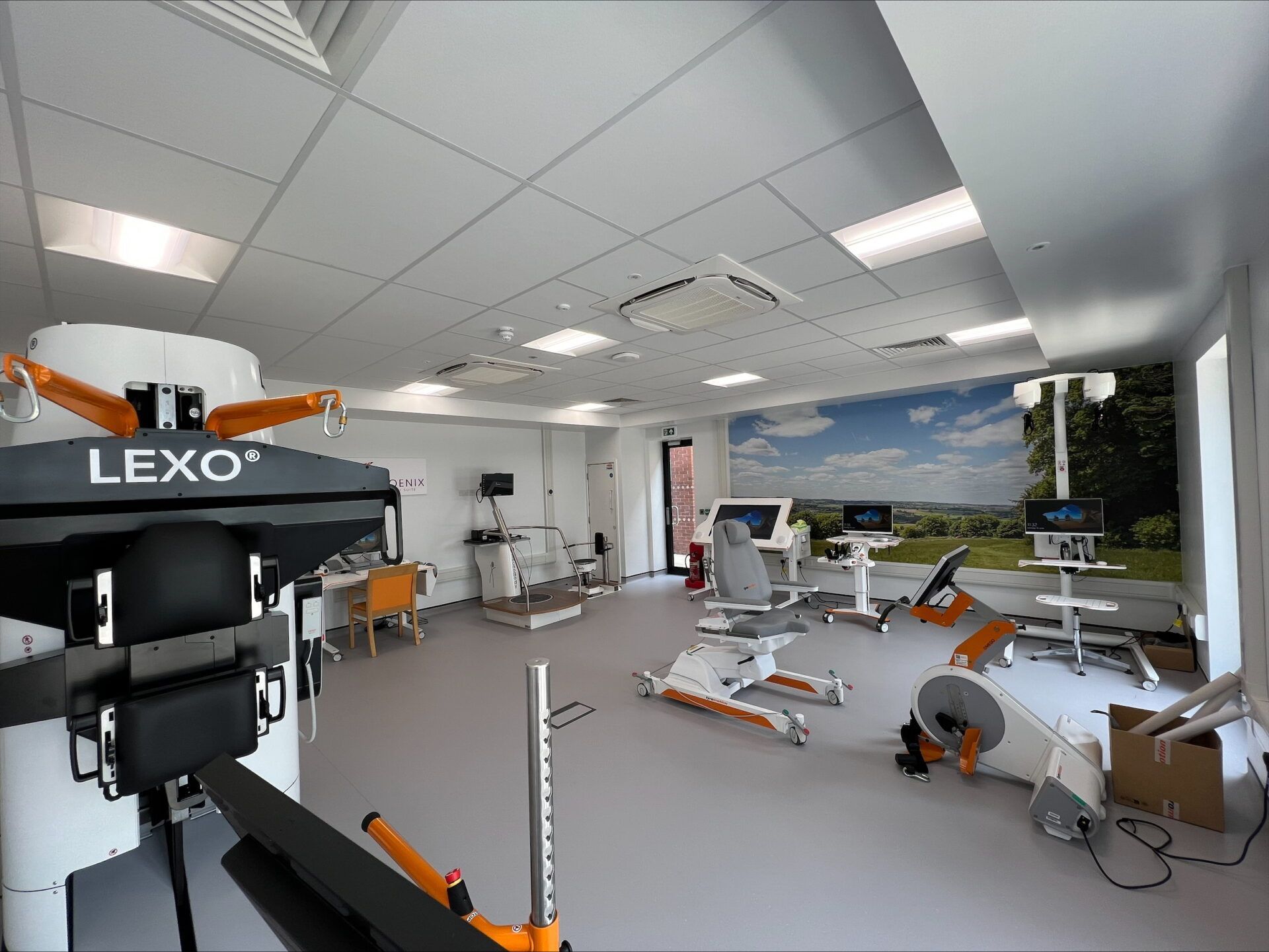
A New Era of Rehabilitation: The Phoenix Suite Opens at Montagu Hospital We’re proud to share a major milestone for rehabilitation technology in the UK - the official opening of the pioneering Phoenix Suite at Montagu Hospital . This brand-new therapy suite represents a significant investment in advanced neurorehabilitation and marks an exciting step forward for patient care within the NHS. Ectron is honoured to have played a key role in this incredible development, supplying a full range of innovative solutions to support recovery, independence, and improved outcomes for patients. At the heart of the Phoenix Suite is the LEXO , the UK’s first installation of this groundbreaking gait training system within the NHS. The LEXO combines robotic-assisted movement with real-time feedback, allowing patients to retrain their gait patterns safely and effectively - a huge step forward for post-stroke and neurological rehabilitation. Alongside the LEXO, we’ve also provided a comprehensive Tyrosolution setup, including devices such as Amadeo for hand rehabilitation and Omego Plus for cycling and stepping therapy. Together, these systems create a dynamic, gamified environment that motivates patients while offering clinicians precise, data-driven insights. The suite also features the Prokin 252 by Tecnobody, delivering detailed balance and posture assessments, and the Fesia Grasp , which uses functional electrical stimulation to support hand movement and functional recovery. By integrating these technologies, The Phoenix Suite offers one of the most complete rehabilitation solutions within the NHS - empowering clinicians and transforming the patient experience. Such technology, previously only available privately, allows patients to take part in personalised rehabilitation, while still working closely with specialist therapists. We’re thrilled to have worked alongside the dedicated teams at Doncaster and Bassetlaw Teaching Hospitals NHS Foundation Trust to bring this vision to life. The Phoenix Suite truly embodies the future of neurorehabilitation: technology-led, patient-centred, and full of possibility.
Show More